The Silbo de la Gomera is a whistled communication system used on the island of La Gomera, in the Canary Islands.
It was declared an Intangible Heritage of Humanity by UNESCO in 2009. It is a unique form of long-distance communication used to transmit messages between the island’s inhabitants.
Currently, it is taught in schools on La Gomera to ensure this cultural legacy is not lost.
“Silbo”: This is a song by the French singer Feloche. He incorporated the Silbo de la Gomera into his song “Silbo,” using this technique to create a unique and innovative sound. Feloche sang it at the Parisian music festival. The lyrics are poetic and full of metaphors, and the music is upbeat and catchy, making it a huge hit in France.
For those who want to go beyond theory and experience the Silbo Gomero firsthand, Ipalan Trekking includes in its Agulo excursion a live demonstration and introductory session led by a local instructor, a guardian of this ancestral tradition recognised as Intangible Cultural Heritage of Humanity.
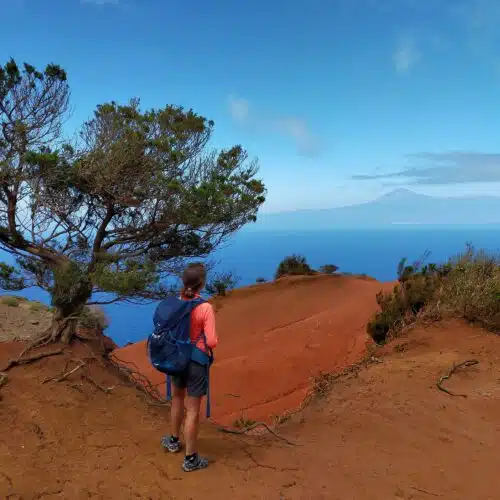
We meet the instructor in a quiet corner of the village, where he explains how this whistled language emerged as an ingenious response to the island’s rugged terrain, allowing people to communicate across ravines and steep slopes. His words blend with the first whistles that echo through the landscape, evoking the daily life of past generations.
He then introduces the fundamental techniques: hand position, breath control, and the variations in pitch and resonance that transform spoken language into whistles. Participants are invited to try their first sounds, guided step by step to understand how syllables are shaped and how messages are modulated.
More than a demonstration, this is a moment of cultural transmission, where landscape, memory, and identity come together to reveal the deep connection between the people of La Gomera and their territory. It is a rare opportunity to approach the Silbo not only as a language, but as a living heritage.
Envíanos un mensaje